Discover the essence of our Ethiopia Teshale Heurioso: A specialty coffee from Ethiopia for espresso

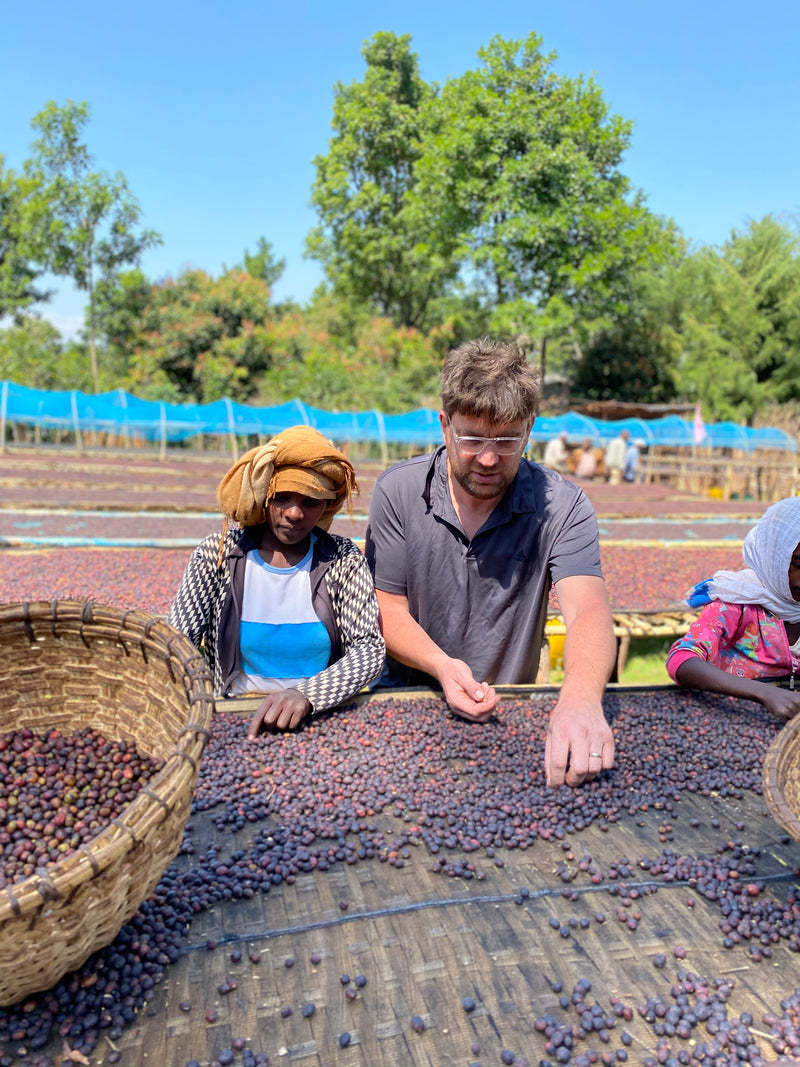
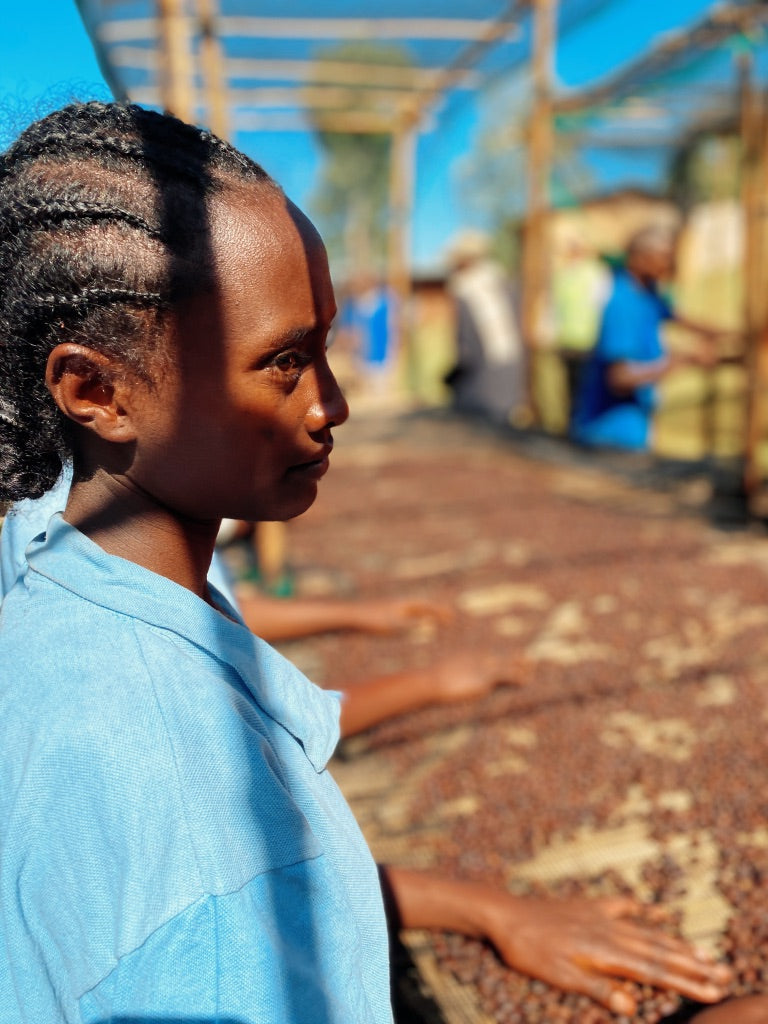
Teshale Heurioso is known in the micro-region of Bona Qeqe (part of the larger Bona region of Sidama) as one of thefinest coffee farmers.Teshale, 46, is the second generation ofhis family to cultivate this highland land,where he now spends most of his time farming with his wife and six children. And they do it well, with near-perfect green beans and no lower quality waste, nearly 90% sieve size 14 and above, and quickly reaching grade 1 quality.Before starting to export coffee from his farm, he was an active member and treasurer of the local cooperative in Bona for six years. During that time, he would recounts that he dreamed of exporting on his own, and in 2019, he started exporting his first batch. Teshale currently uses Heleph Coffee's technical protocol for harvesting and drying, producing a modest volume of 100 bags (Grade 1 quality) per year. Teshale carefully select ripe cherries to ensure the best quality beans: too green andthe beans may have a sour taste; too ripe and the bean may be past their prime andeven close to rotting. After picking the coffee cherries from the coffee trees, they are spread out thinlayers to dry in the sun.Teshale use African Raised Beds to enable air to flow around the cherries, thuseven drying. The cherries are turned regularly to avoid mould, fermentation, orrotting.After the cherries have been thoroughly dried, they’re sent to mills for hulling.That means the separation of the seeds from the rest of the dried fruit.Once the cherries are properly dry, the skin and dried fruit flesh are removed, andthe green coffee is stored.

1

Know your coffee's origin

2

The Bona Region

3

Roasting process

4

How to enjoy this coffee

1. Know your coffee's origin

1. Know your coffee's origin

Bona is a district in Ethiopia’s renowned Sidama region, celebrated for its rich coffee heritage. Bordered by Oromia to the south, Hula to the west, Bursa to the northwest, Arbegona to the north, and Bensa to the east, this area provides ideal growing conditions for specialty coffee.

This coffee is cultivated by 600 smallholder farmers, each managing between three to eight hectares of land. They have been refining their craft for over a decade, growing carefully selected JARC varietals under natural shade. Their dedication to quality ensures a consistently exceptional harvest.

Did you know? Ethiopian coffee varieties can be broadly divided into two types: JARC varieties and wild coffee plants. JARC varieties were developed by the Jimma Agricultural Research Centre (JARC), one of Ethiopia’s federal agricultural research institutes, to improve disease resistance and yields. A total of 40 varieties have been created, each maintaining Ethiopia’s characteristic flavor complexity while ensuring sustainability for smallholder farmers.

2. The Bona Zuria Region

2. The Bona Zuria Region

Sidama is one of Ethiopia’s most famous coffee-producing regions, known for its high-altitude farms, nutrient-rich soil, and ideal climate. Bona Zuria’s combination of cool temperatures and shade-grown farming allows for slow cherry maturation, resulting in coffees with bright acidity, deep sweetness, and intricate flavor profiles.

The farmers in this district practice traditional, sustainable farming methods, ensuring that each harvest reflects the unique terroir of Bona Zuria. Their expertise, combined with the natural processing method, brings out the distinct fruit and floral notes characteristic of Sidama coffees.

3. Roasting process

3. Roasting process

Having such an smooth and delicate coffee at hand, we aim for a moderate and rather slower roast to enhance flavor depth and texture. This will create a long lasting and enjoyable aftertaste.

4. How to enjoy this coffee

4. How to enjoy this coffee

Ethiopia Bona Zuria shines when brewed as an espresso, delivering a velvety mouthfeel with pronounced fruit and vanilla notes. Its creamy body and sweet finish make it a fantastic option for straight shots, offering a refined yet vibrant experience.

For a more indulgent treat, try it in a milk-based drink like a cappuccino or flat white—where the apricot and raspberry notes beautifully complement the milk’s natural sweetness. Whether enjoyed as a pure espresso or paired with milk, this coffee is a must-try for those who appreciate a complex yet smooth cup.